ND Upgrade - Personal
  • Tell My Loved Ones
  • Our Toolbox
  • Interpersonal 🚧
  1. - Good Learning
  • Tell My Loved Ones About…

  • - Acting More Neurodivergent
  • - Autism
  • [ND Kids]

  • - Growing My ND Identity
  • - Choosing A Speech & Language Therapist
  • - Understand Meltdowns
  • - Good Learning
  • - The Size of Problems
  • - Behaviour Charts
  • - Social Stories
  • - Screen Time

Neurodivergent Upgrade

Good Learning

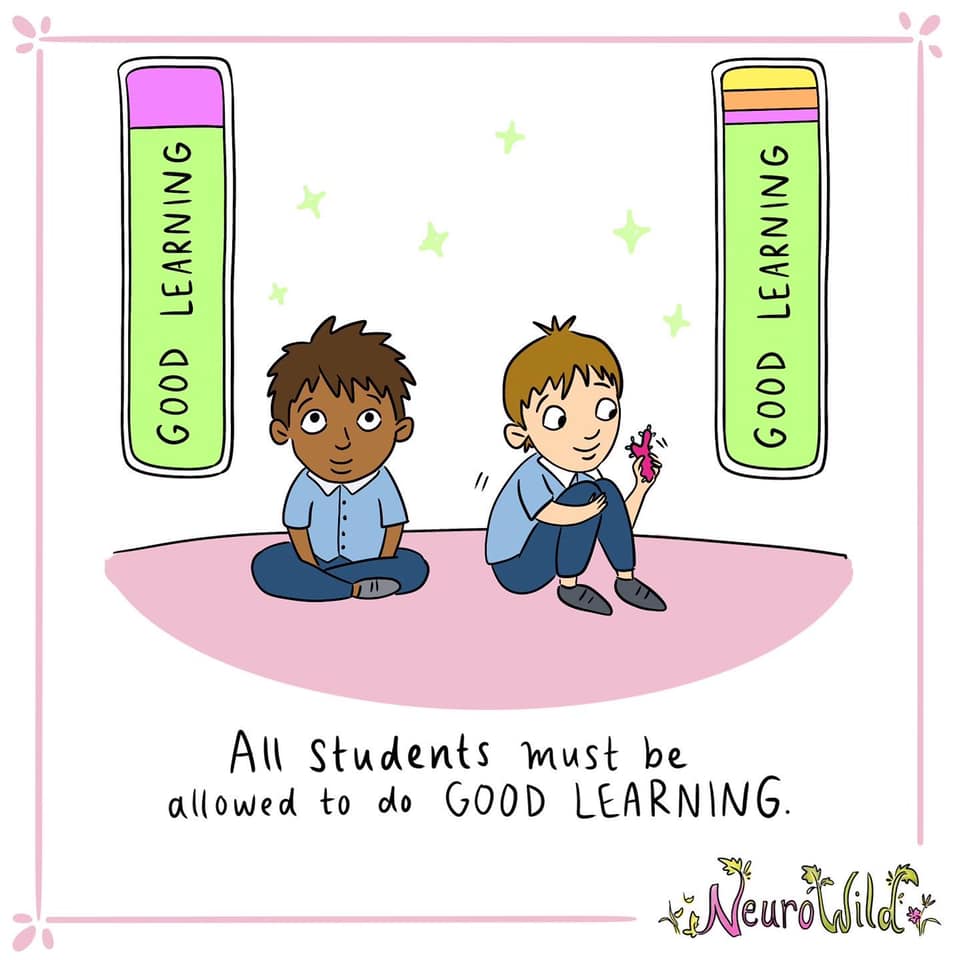
A NeuroWild comic panel showing two children sitting on a pink rug. The neurotypical child sits still with hands in lap. The neurodivergent child sits sideways, moving slightly and holding a small fidget toy. Two vertical bars labelled 'Good Learning' flank them: both filled equally with green. The caption reads: 'All students must be allowed to do GOOD LEARNING.' This opening panel establishes that both children deserve equal access to the conditions that allow them to learn effectively.

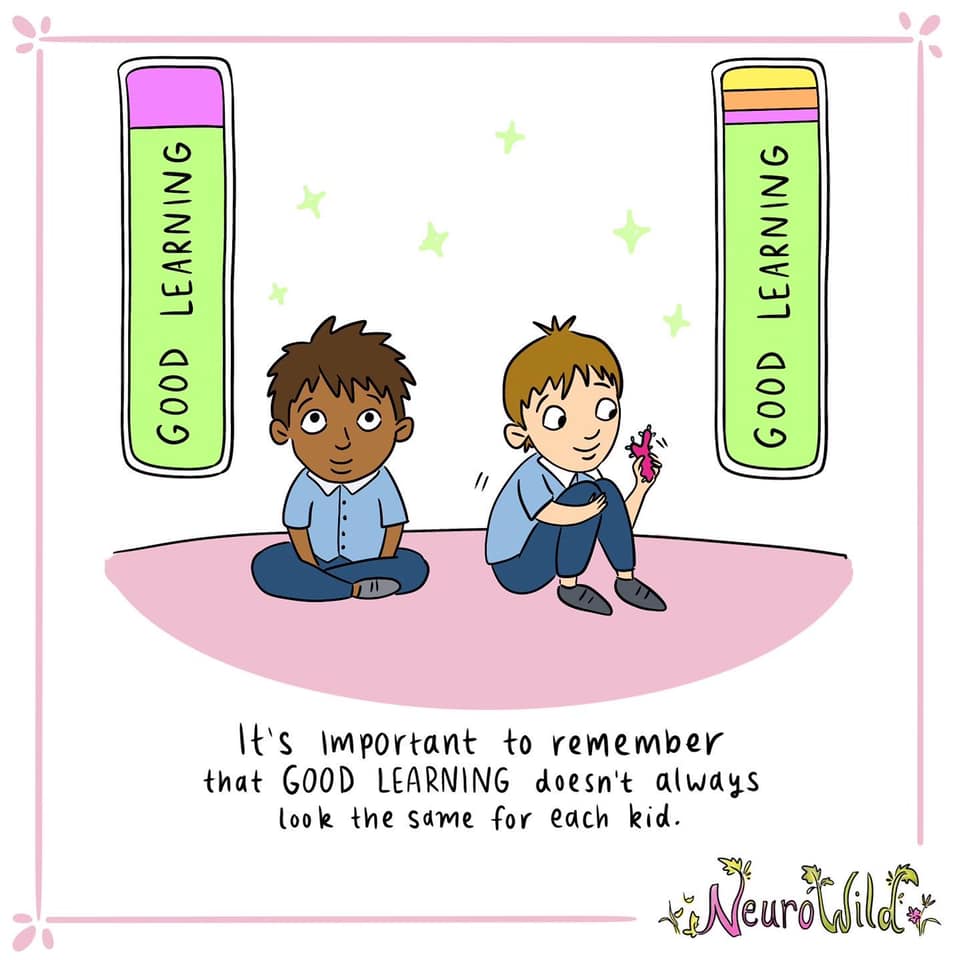
The same two children in the same positions on the pink rug, with the two 'Good Learning' bars still equally full. The caption reads: 'It's important to remember that GOOD LEARNING doesn't always look the same for each kid.' This panel introduces the core argument: the appearance of attentiveness is not the same as actual learning.

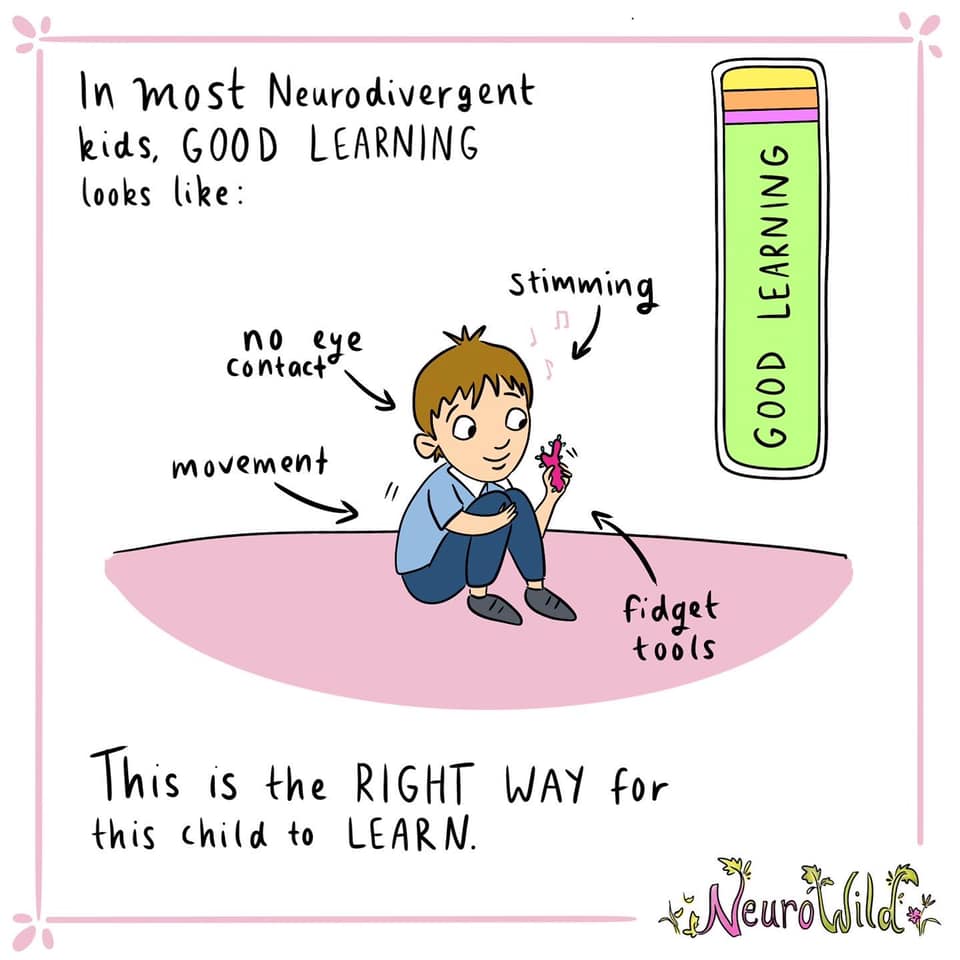
A single neurodivergent child shown alone on the pink rug, holding a small fidget toy and moving slightly. Arrows point to four features of his posture and behaviour: 'stimming,' 'no eye contact,' 'movement,' and 'fidget tools.' His 'Good Learning' bar is shown full. The caption reads: 'In most Neurodivergent kids, GOOD LEARNING looks like: This is the RIGHT WAY for this child to LEARN.' This panel directly validates that stimming, movement, and avoiding eye contact are not barriers to learning they are how this child accesses learning.

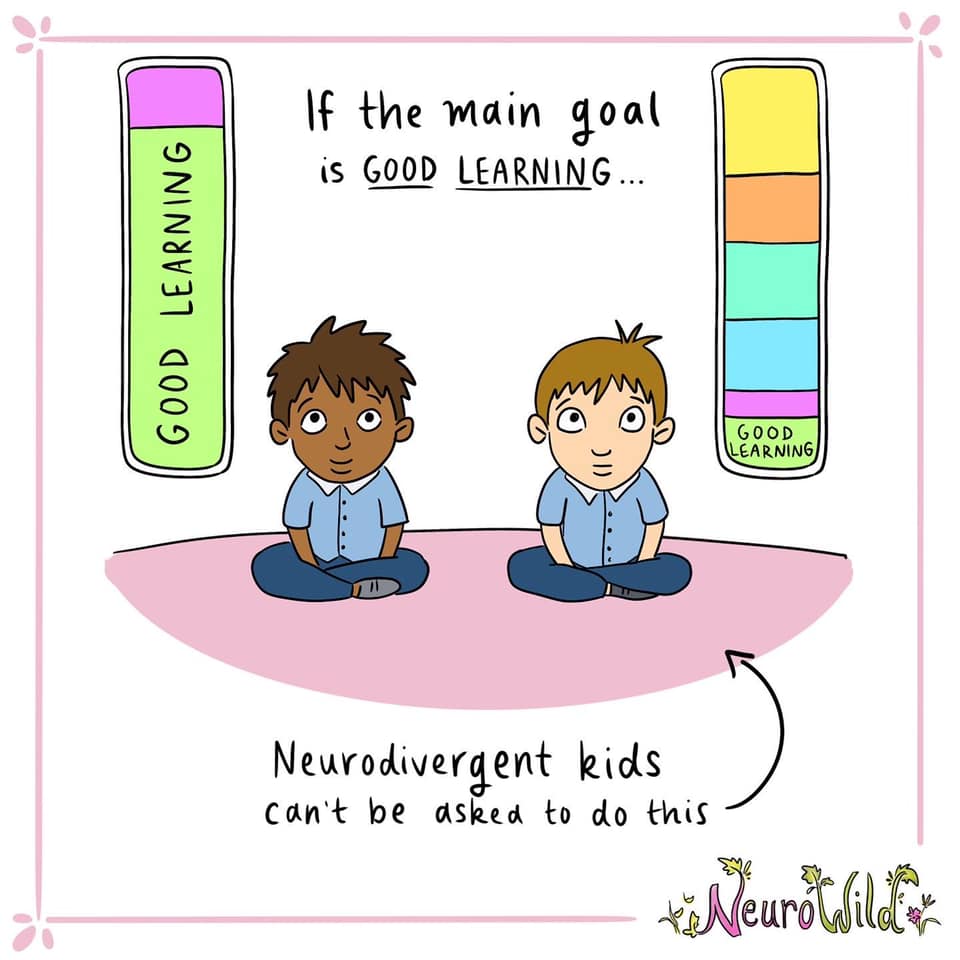
Both children are shown sitting on the pink rug. The neurotypical child's 'Good Learning' bar is full. The neurodivergent child's bar shows only a small sliver of green at the bottom labelled 'Good Learning,' while the rest is divided into coloured segments suggesting competing cognitive demands. An arrow points to the neurodivergent child's bar with the caption: 'Neurodivergent kids can't be asked to do this.' The heading reads: 'If the main goal is GOOD LEARNING…' This panel illustrates that when neurodivergent children are required to sit still and maintain eye contact, most of their cognitive capacity is consumed by those demands, leaving almost nothing available for actual learning.

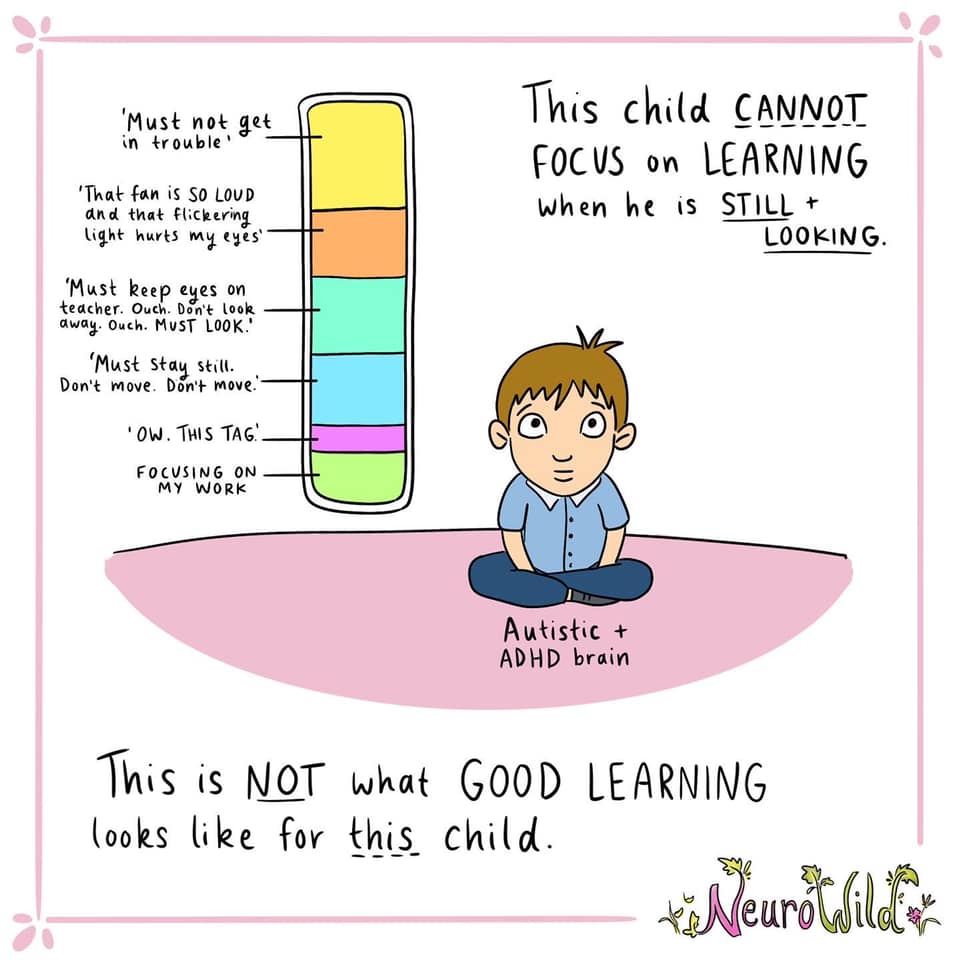
A close-up on the neurodivergent child sitting still and making eye contact, labelled 'Autistic + ADHD brain.' His 'Good Learning' bar is shown mostly filled with competing internal demands, annotated with his internal thoughts: 'Must not get in trouble,' 'That fan is SO LOUD and that flickering light hurts my eyes,' 'Must keep eyes on teacher. Ouch. Don't look away. Ouch. MUST LOOK.,' 'Must stay still. Don't move. Don't move.,' and 'OW. THIS TAG.' Only a tiny sliver at the bottom is labelled 'Focusing on my work.' The caption reads: 'This child CANNOT FOCUS on LEARNING when he is STILL + LOOKING. This is NOT what GOOD LEARNING looks like for this child.' This panel gives voice to the internal experience of a neurodivergent child forced to perform neurotypical attentiveness — showing how sensory overwhelm, anxiety about compliance, and physical discomfort fill almost every available unit of mental attention.

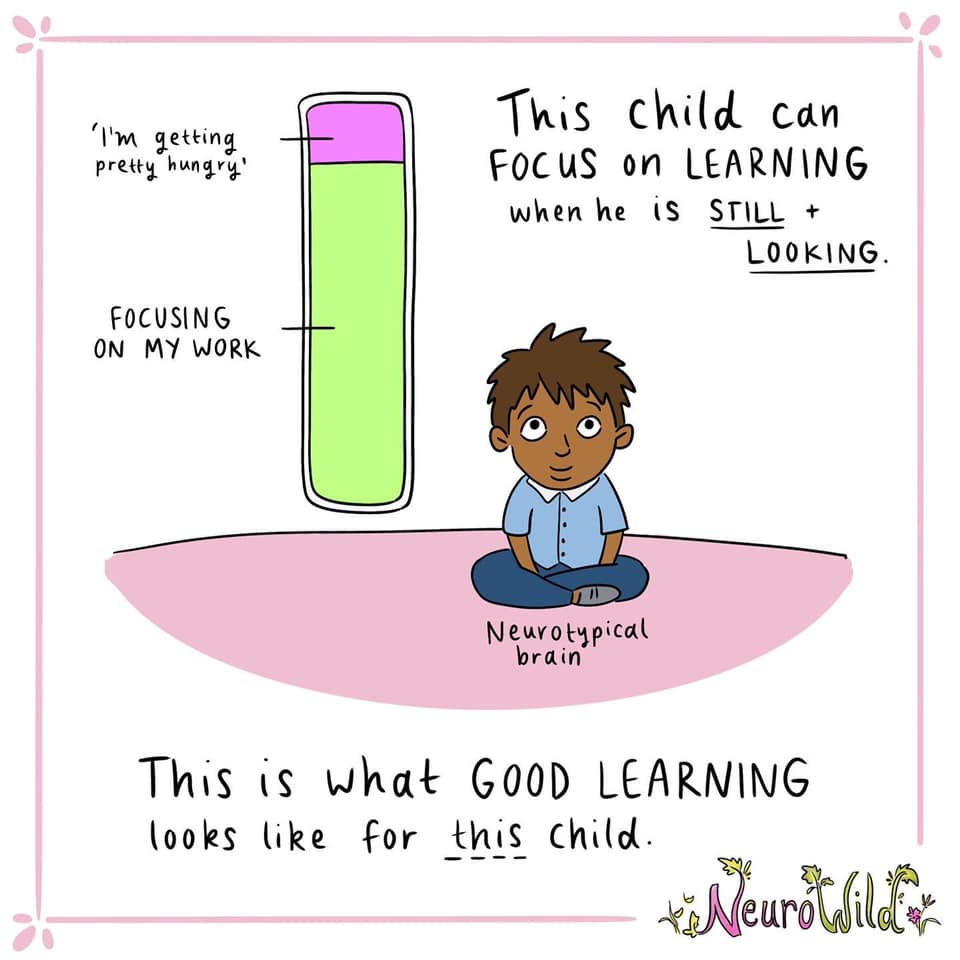
The neurotypical child sits still and makes eye contact, labelled 'Neurotypical brain.' His 'Good Learning' bar is nearly full, with only a small pink segment at the top labelled 'I'm getting pretty hungry.' The large green section is labelled 'Focusing on my work.' The caption reads: 'This child can FOCUS on LEARNING when he is STILL + LOOKING. This is what GOOD LEARNING looks like for this child.' This panel provides the contrast: for a neurotypical child, the sitting-still-and-looking position genuinely does free up attention for learning because it does not create sensory or regulatory demands.

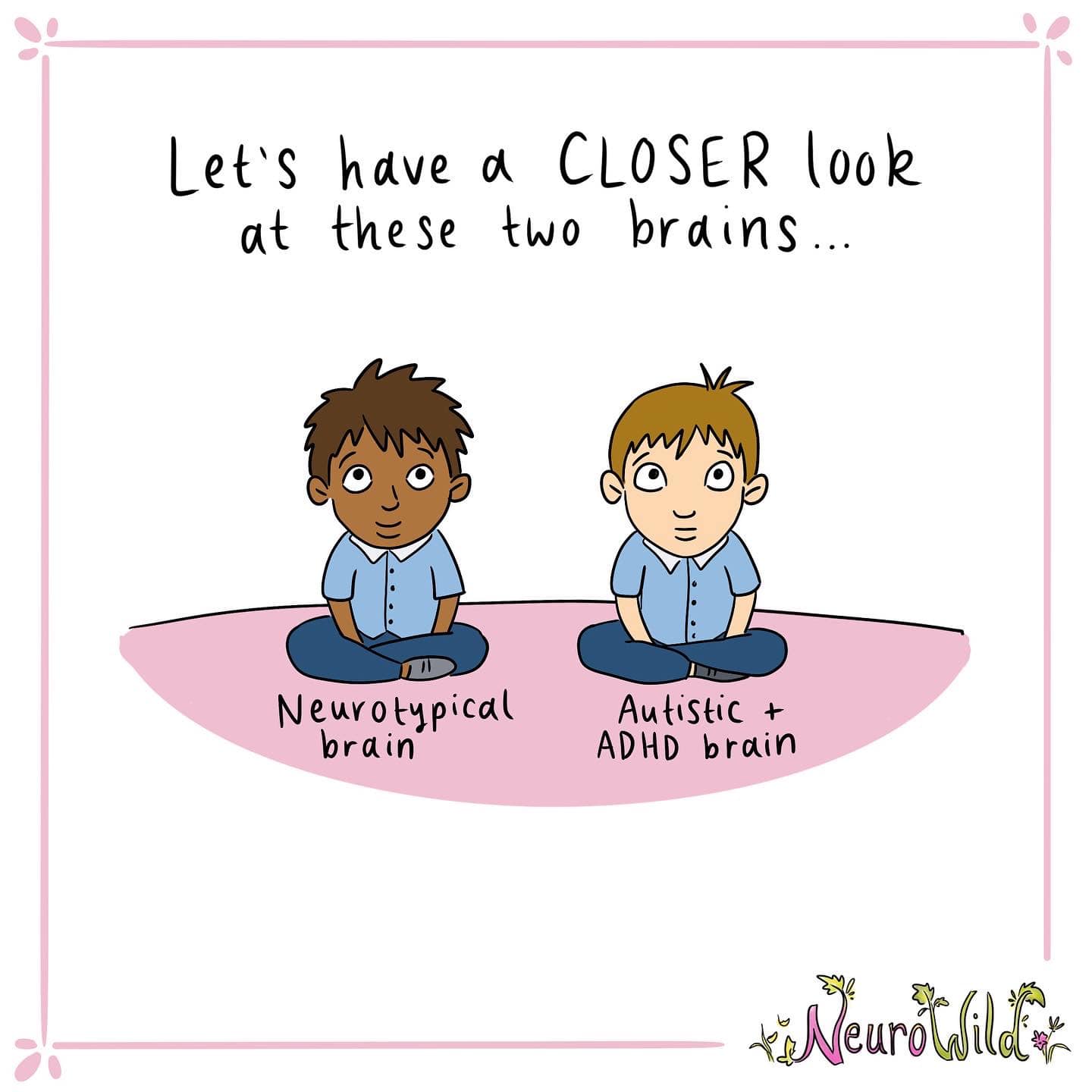
Both children are shown side by side on the pink rug, both sitting still and making eye contact. Labels beneath them read 'Neurotypical brain' and 'Autistic + ADHD brain.' The heading reads: 'Let's have a CLOSER look at these two brains…' This transitional panel sets up the direct comparison between how these two types of brains experience the same classroom expectation.

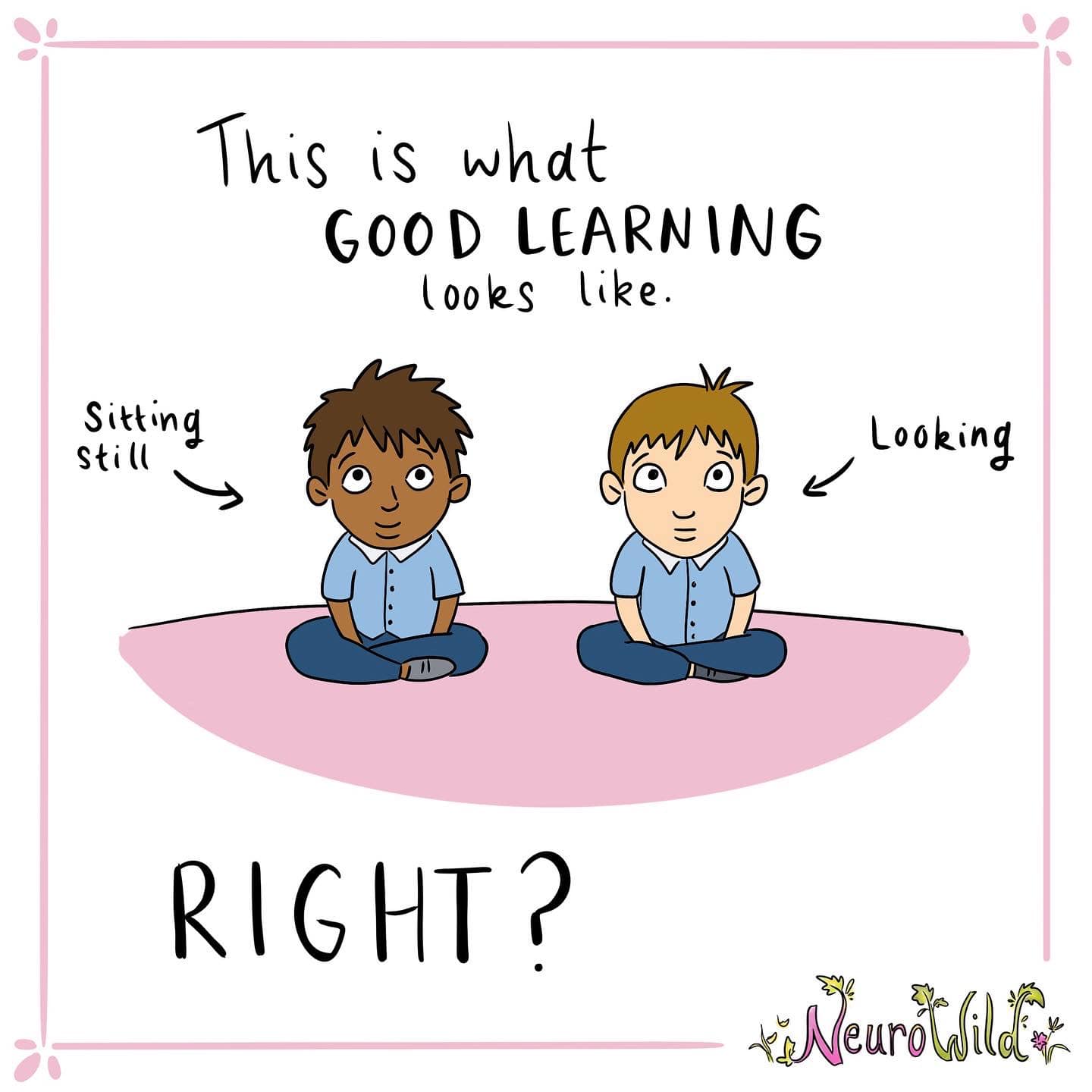
Both children sit on the pink rug. Arrows point to the neurotypical child with the label 'Sitting still' and to the neurodivergent child with the label 'Looking.' The heading reads: 'This is what GOOD LEARNING looks like.' The large text below reads: 'RIGHT?' This panel uses a rhetorical question to challenge the assumption that sitting still and making eye contact is universally the right condition for learning — setting the reader up to reconsider what they thought they knew.

About The Artist

NeuroWild is a comic strip series created by Emily Hammond. Emily is a speech pathologist with ADHD and Autism herself and a proud mother to neurodivergent children. Click here to learn more about the artists we promote and how to support their work.

© 2026 Sophie Strassmann All Rights Reserved

Cookie Preferences